
Why We Don’t Run Dogs In Collars

The Science, Safety & Welfare Behind Our Choice at Pickles Canicross Club
At Pickles Pet Pantry and Pickles Canicross Club, one thing you’ll notice very quickly is this:
We do not run dogs attached to collars.
Not because it’s “trendy.”Not because we’re trying to sell harnesses.And certainly not because we believe owners using collars are bad owners.
We simply believe that when we know better, we should do better — especially in a sport where dogs are actively pulling, accelerating, twisting, climbing, braking and working at speed.
For us, this is about welfare, biomechanics and long-term safety.

Dogs Are Athletes In Canicross
When dogs participate in Canicross, they are not casually strolling beside us.
They are:
generating forward pulling force
changing direction rapidly
absorbing impact
increasing respiratory demand
elevating heart rate
engaging shoulder, spinal and neck musculature
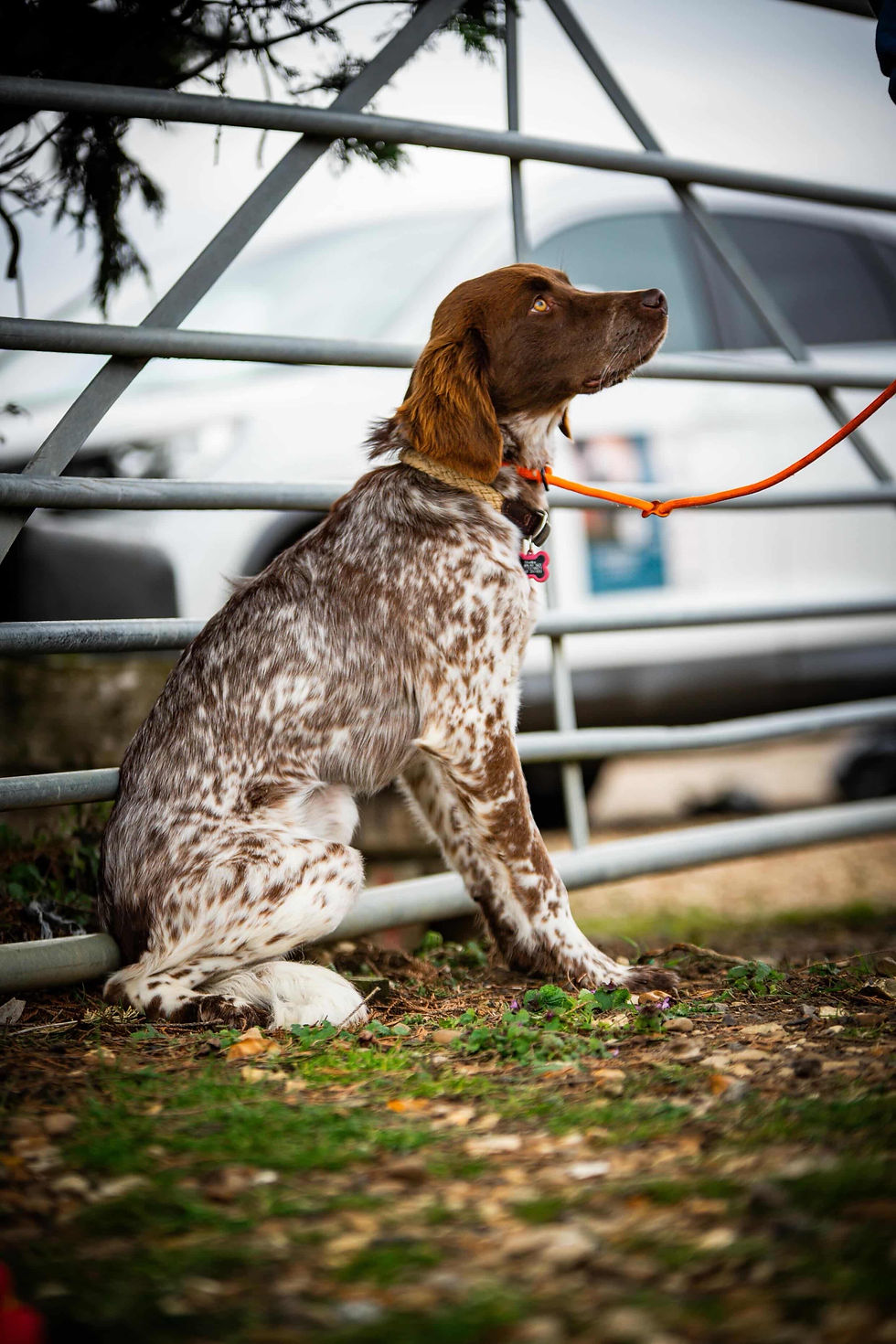
A collar concentrates force around one of the most vulnerable anatomical areas of the body:the neck.
That matters more than many people realise.
The Neck Is An Incredibly Sensitive Structure
A dog’s neck contains:
the trachea (windpipe)
thyroid gland
cervical vertebrae
oesophagus
major blood vessels
delicate nerves
Unlike a harness, which distributes force across the chest and body, a collar localises pressure directly onto these structures.
In normal day-to-day life, many dogs tolerate collars perfectly well for identification purposes.
But during pulling sports or high-intensity exercise, the forces involved change dramatically.
What The Science Says About Collar Pressure
There is growing veterinary concern surrounding repetitive neck pressure in dogs, particularly during exercise and pulling activities.
A 2020 study published in the Journal of Veterinary Behavior found that collars can create significant pressure around the cervical region, especially during pulling or sudden restraint. Researchers highlighted concerns surrounding tissue compression and force concentration around the airway and neck structures.
Another study by Grainger, Wills & Montavon investigating leash pressure demonstrated that even everyday lead tension can generate substantial force on the neck — often far greater than owners realise.
This matters because the trachea is not protected by solid bone. It is formed from delicate cartilage rings and soft tissue structures designed for airflow, not repeated impact loading.
Veterinary professionals have associated excessive cervical pressure with:
tracheal irritation
coughing
airway inflammation
soft tissue strain
cervical pain
increased intraocular pressure
One particularly important study published in the Journal of Small Animal Practice showed that pressure applied to the neck may significantly increase intraocular pressure in dogs — something especially concerning for breeds predisposed to eye disease or glaucoma.

Brachycephalic Dogs Are At Even Greater Risk
For flat-faced breeds, the conversation becomes even more important.
Dogs with brachycephalic obstructive airway syndrome (BOAS) already have compromised airflow due to narrowed airways, elongated soft palates and altered respiratory anatomy.
Adding repeated pressure to the neck during exercise may further increase airway resistance and respiratory strain.
This is one reason many veterinary surgeons and physiotherapists strongly recommend harness use for brachycephalic breeds during walks and exercise.
Even in fit, athletic brachycephalics, airway protection matters.
Biomechanics Matter In Sporting Dogs
Canicross dogs are canine athletes.
In sport medicine and physiotherapy, force distribution matters enormously.
Harnesses — when properly fitted — spread pulling force across:
the sternum
chest musculature
ribcage
torso
This reduces localised stress on the neck and allows dogs to engage their bodies more naturally during propulsion.
In contrast, collars place force through a relatively small surface area around the cervical region.
During sudden acceleration or line tension, this can create concentrated loading directly onto sensitive anatomical structures.

“But My Dog Doesn’t Pull”
This is something we hear often — and honestly, many dogs don’t.
But Canicross changes movement patterns.
Even dogs who walk beautifully on a collar may:
surge forward during excitement
hit the end of a line
brake suddenly downhill
twist unexpectedly
experience sudden directional force
Remeber the right kit can help them learn the sport appropriately
In sport, those split-second moments matter.
A single harsh impact to the neck can create strain far beyond what we’d see on a normal lead walk.
Harnesses Aren’t Automatically Perfect Either
This is important to say honestly.
A poor harness can absolutely restrict movement, alter gait and create discomfort.
Research into canine gait analysis has shown that some chest-restrictive harnesses may reduce shoulder extension and alter movement patterns.
That is why at Pickles we strongly favour:

properly fitted Y-shaped harnesses
sport-specific Canicross harnesses
individual fitting support
freedom of shoulder movement
The answer is not “any harness.”
The answer is the right harness.
Our Pickles Approach
At Pickles Canicross Club, welfare always comes before speed, medals or aesthetics.
That means:
no running attached to collars
properly fitted harness guidance
gradual conditioning
education around canine biomechanics
supporting dogs as individual athletes
Whether your dog is a rescue learning confidence, a happy trail runner, or a competitive racer, they deserve equipment designed to support their body safely.
Because great Canicross isn’t just about going fast.
It’s about keeping dogs healthy enough to enjoy the adventure for years to come.


Comments