
"My Dog Is Basically a Wolf..." — One of the Biggest Myths in Pet Nutrition
"Feed your dog as nature intended."
"Dogs are wolves."
"Their digestive system hasn't changed in thousands of years."
If you've ever looked for a new dog food, chances are you've seen these phrases.
A majestic wolf stands on a mountain.

Snow falls.
The music swells.
Then... a bag of dog food appears.
It's brilliant marketing.
It tells a simple, emotional story.
Your dog is a wolf... so surely they should eat like one?
As someone who spends every day talking to dog owners, I completely understand why this message resonates. We all want to make the very best decisions for our dogs.
But here's the thing...
The real science is even more fascinating than the marketing.
Let's start with what we know...

Dogs did evolve from wolves.
Modern domestic dogs (Canis lupus familiaris) share a common ancestor with the grey wolf (Canis lupus), and genetically they're incredibly closely related.
That isn't up for debate.
But being closely related doesn't mean they're nutritionally identical.
After all...
Humans share almost 99% of our DNA with chimpanzees.
That doesn't mean we'd be healthier if we all lived in trees and ate exactly the same diet.
Evolution isn't simply about DNA.
It's about adaptation.
And our dogs are one of evolution's greatest success stories.
Dogs didn't stay wolves...
They became dogs.
For at least 15,000 years—and likely much longer—dogs have evolved alongside humans.
They learnt to live with us.

Work with us.
Protect us.
Sleep beside us.
Eventually...
Steal our sofas and somehow convince us they haven't eaten for at least three weeks... despite finishing breakfast twenty minutes ago.
As we changed...
Dogs changed too.
Not just in how they behaved.
Not just in how they looked.
But even in how they digest food.
One tiny gene changed a huge part of canine nutrition
This is one of my favourite pieces of canine nutrition research.
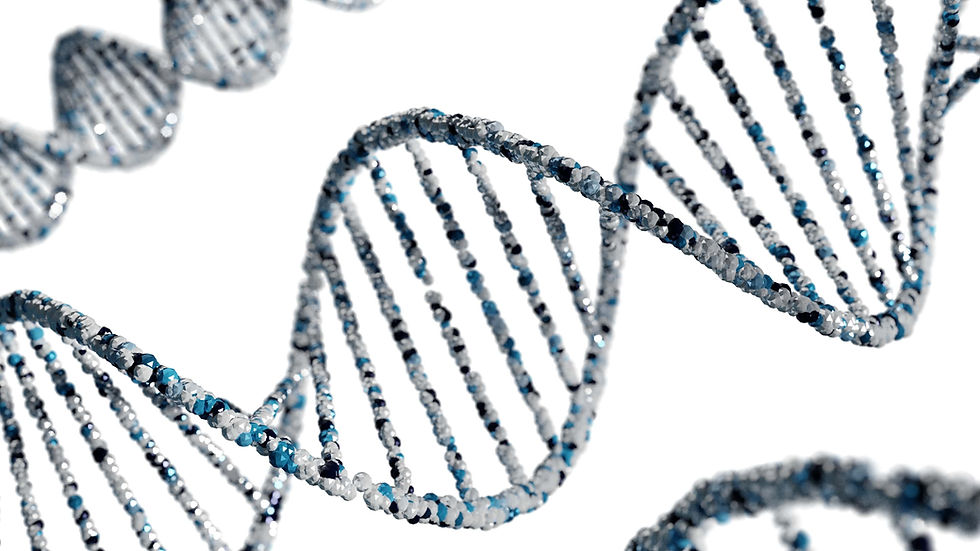
Scientists discovered that domestic dogs carry significantly more copies of a gene called AMY2B than wolves.
Without getting too science geek (although I do love this bit!), this gene helps produce pancreatic amylase—an enzyme responsible for digesting starch.
In simple English...

Your Labrador, Spaniel or French Bulldog is biologically much better equipped to digest cooked starch than a wolf.
That's evolution in action.
Does that mean dogs need lots of carbohydrates?
No.
Does it mean grains are suddenly magical?
Also no.
But it does mean one of the biggest marketing claims—
"Dogs can't digest carbohydrates because they're wolves."
—isn't supported by what we know today.
🐾 Katie's Fun Fact
Domestic dogs can carry anywhere from 4 to more than 30 copies of the AMY2B gene, depending on the breed.
Wolves typically carry just two.
Evolution didn't stop when wolves became dogs.
But wolves eat meat... don't they?
Absolutely.
But probably not in the way social media suggests.

One thing I hear all the time is...
"Wolves eat an 80:10:10 diet."
The reality?
Wolves don't own kitchen scales.
They don't weigh liver.
They don't calculate calcium-to-phosphorus ratios.
They eat whatever nature provides.
That includes:
• Muscle meat
• Organs
• Bone
• Skin
• Fur
• Blood
• Tendons
• Connective tissue
• Stomach contents
• The occasional berries, grasses and plant material
Their diet changes with the seasons, the weather, prey availability and geography.
Nature is beautifully messy.
There has never been one perfect "wolf diet."
🐾 Katie's Fun Fact
A grey wolf may travel 20–30 miles (32–48 km) in a single day searching for food.
Meanwhile Winston considers walking to the kitchen a successful expedition... especially if treats are involved - much to the wolf theories dismay - one of his favourites is raspberries!
So... what exactly are we feeding for?
This is the question I always come back to.
Not...
"What does a wolf eat?"
But...
"What are we trying to achieve for our dogs?"

A wild wolf has one job.
Survive.
Find enough food to reproduce.
Raise a litter.
If they reach six years old in the wild, they've actually done incredibly well.
Many never make it that far.
Disease.
Injury.
Starvation.
Territorial fights.
Harsh winters.
Life in the wild is tough.
Our dogs have a completely different job.

To be our running partners.
Our rescue dogs.
Our assistance dogs.
Our family members.
Our children's best friends.
Our sofa companions.
We're not trying to help them survive until next winter.
We're trying to help them stay healthy, mobile and happy for 10, 12, 15 or sometimes even 18 years.
Those are two completely different nutritional goals.
🐾 Katie's Fun Fact
The average wild wolf lives around 3–6 years.
By comparison, the oldest reliably verified dog ever recorded—Bluey from Australia—lived an astonishing 29 years and 5 months.
Modern veterinary medicine, balanced nutrition, parasite prevention and responsible ownership have helped dogs live lives their wild ancestors could never have imagined.
This is why "natural" isn't always the goal.
Now before anyone panics...
I'm not saying nature is wrong.
Far from it.
Nature is incredible.
But nature is also harsh.

Nature doesn't provide vaccinations.
Nature doesn't provide hydrotherapy.
Nature doesn't provide joint supplements.
Nature doesn't provide allergy testing.
Nature doesn't provide hydrolysed diets for dogs that desperately need them.
As pet owners, we're incredibly fortunate.
We can use modern science to improve not just the length of our dogs' lives...
...but the quality of those years too.
So when someone says,
"Feed your dog exactly as nature intended."
I sometimes smile.
Because nature never intended our dogs to sleep on memory foam beds, have birthday parties or celebrate their fifteenth birthday surrounded by the people who love them.
Yet I think we'd all agree that's something worth striving for.
Does this mean wolves aren't important?
Absolutely not.
We've learnt an enormous amount about canine behaviour, communication and evolution from studying wolves.
But nutrition isn't about copying one species.
It's about understanding another.
Modern canine nutrition asks questions like:
• Is the diet complete and balanced?
• Is it digestible?
• Does it provide all the essential nutrients?
• Is it appropriate for this dog's age, lifestyle and health?
Those questions matter far more than whether a wolf appears on the front of the bag.
At Pickles Pet Pantry, we don't feed marketing.
We feed dogs.

Sometimes that's raw.
Sometimes it's cold-pressed.
Sometimes it's wet food.
Sometimes it's dry food.
Sometimes it's a hydrolysed veterinary diet because that's exactly what a particular dog needs.
The feeding style isn't what makes a diet good.
The formulation does.
The nutritional balance does.
The evidence does.
Most importantly...
The dog in front of us does.
Because there isn't one perfect diet for every dog.
There never has been.
And there never will be.
A Little Note from Katie
One of the things I love most about nutrition is that it's always evolving.
Science doesn't stand still—and neither should we.
If you ever pop into Pickles, you'll probably notice I ask far more questions than I answer.
How old are they?
How active are they?
Any allergies?
How are their stools?
How's their coat?
How do they cope on their current food?
Because no research paper, no advert and no trendy slogan will ever know your dog as well as you do.
So if there's one thing I'd love you to take away from this blog, it's this...
Don't feed the marketing. Feed the dog.
Wolves taught us where dogs came from.
Science helps us understand where they are today.
And together, they can help us give our dogs something their wild ancestors rarely had...
A long, healthy, happy life.
Thank you for reading, and thank you for trusting our little family business to be part of your dog's journey.
Love,
Katie 🐾Head of Nutrition, Pickles Pet Pantry



Comments