
More Than Pretty Feathers: The Science, Chaos & Joy of Living With Parrots 🦜

At Pickles Pet Pantry, many people know us for dogs, nutrition advice and muddy Canicross adventures…
But what many don’t realise is parrots are part of the Pickles story too.
Our family’s first parrot was Lucy, a Macaw who joined the family during Dave’s childhood
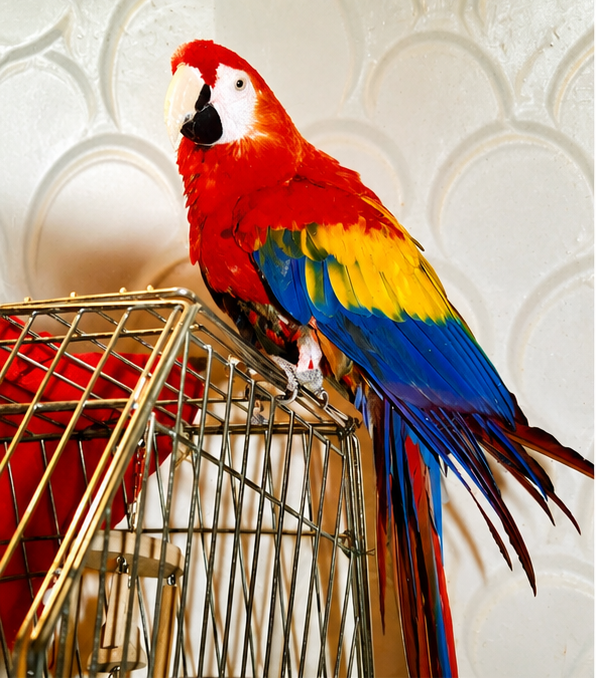
and remained part of our lives right through into Katie’s teenage years — proving immediately one of the biggest truths about parrots:
These aren’t short-term pets.
Today, if you look around the shop, Lucy still watches over us — painted proudly onto the wall at Pickles Pet Pantry. And nearby, above the tills, sits Pickle himself.
Because fun fact…
The “Pickle” in Pickles Pet Pantry was not a dog.
He was a rescue Quaker parrot 💚
Sadly, Pickle passed away shortly before the shop opened, but his cheeky personality still shapes everything we do.
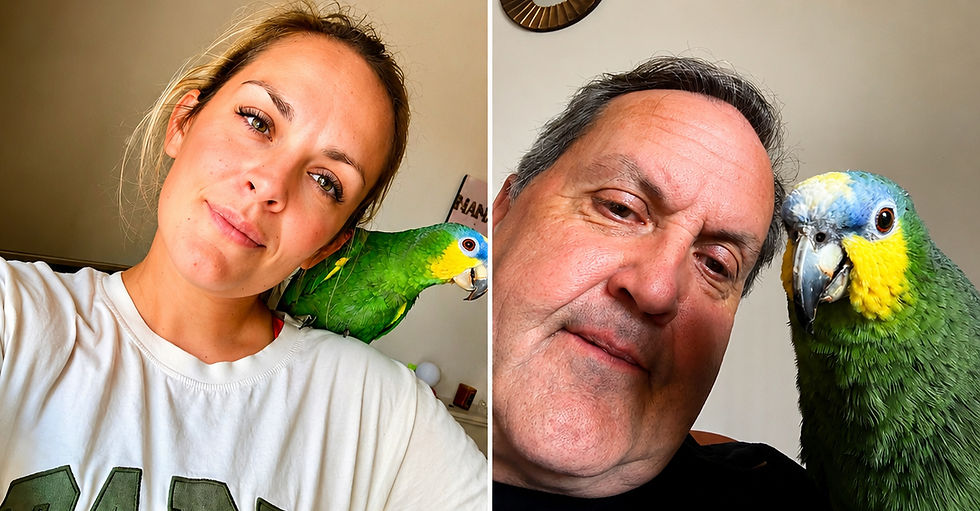
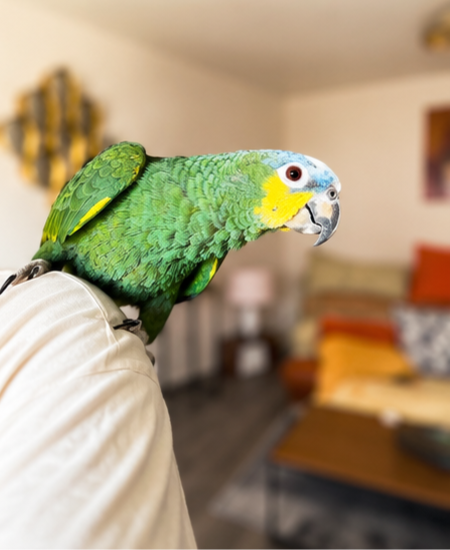
Our latest feathered family member is Ken, a rescue Amazon from Animals in Need Northamptonshire — kind, funny, incredibly clever and in possession of a vocabulary that occasionally reminds us parrots perhaps listen a little too closely…
Parrots Are Intelligent… Sometimes Inconveniently So
Parrots are among the most cognitively advanced non-human animals studied.
Research has repeatedly demonstrated sophisticated problem solving, social learning, object manipulation and communication abilities in multiple parrot species.
Which sounds wonderful.
Until they use those skills exclusively for crime.

Opening cupboards.
Destroying wallpaper.
Learning words they absolutely should not know.
Or screaming because you had the audacity to leave the room.
Studies in parrots including African Greys have demonstrated advanced cognitive performance including numerical understanding, categorisation and social learning abilities.
Intelligence is wonderful.
Intelligence without enrichment?
Usually loud.
Why Enrichment Is Essential (Not Optional)
Parrots evolved to spend large portions of their day:
🦜 Foraging🦜 Flying or climbing🦜 Socialising🦜 Problem solving🦜 Manipulating objects🦜 Exploring environments
In captive settings, insufficient stimulation has been associated with increased risk of behavioural problems including feather damaging behaviour, stereotypies and abnormal repetitive behaviours.
Good enrichment may include:

✔ Foraging toys
✔ Rotating activities regularly
✔ Safe destruction toys
✔ Training sessions
✔ Supervised out-of-enclosure time
✔ Species-appropriate social interaction
A useful rule?
If your parrot never destroys anything, they may not have enough opportunities TO destroy things.
Or if your like Dave log onto important business video calls with your parrot taking notes with your pen....
The Lifespan Conversation Nobody Talks About Enough
One of the biggest welfare issues surrounding parrots is simply longevity.
Approximate lifespans vary enormously:
• Budgies: often 5–15+ years
• Quakers: commonly 20–30+ years
• Amazons: frequently 40–60+ years
• Macaws: 50+ years and potentially much longer
Lucy lived through childhood memories, teenage years and family milestones.
That’s the reality of parrots.
You are often planning for decades, not years.
Why Do So Many Parrots End Up In Rescue?
Sadly, parrots are disproportionately represented in rescue environments.
This rarely happens because birds are “bad”.
More commonly it reflects a mismatch between expectations and reality.
Common contributing factors include:
• Noise levels
• Long lifespan commitments
• Housing changes
• Financial costs
• Behaviour challenges
• Lack of enrichment or understanding
• Major life changes
Rescue parrots can thrive.
But they often require patience, routine and realistic expectations. As a family we love rescue animals but it isn't always easy - Ken has been our easiest take on but remeber its a journey and hey require ALOT - its not just sitting in a cage!
Nutrition: Why “Seed Mix Only” Usually Isn’t The Answer
Nutrition in parrots can become controversial quickly.
Historically, many parrots were fed predominantly seed-based diets.
The challenge?
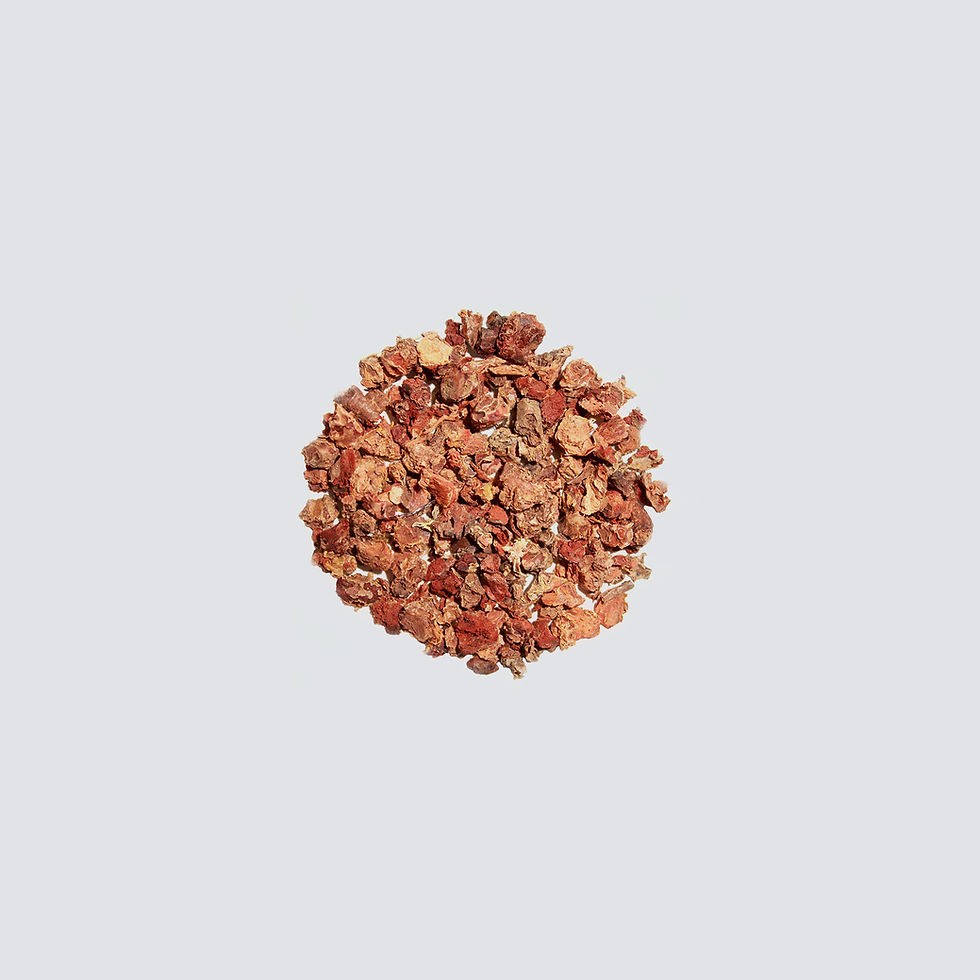
Many seed-heavy diets may provide excessive fat and inadequate levels of key micronutrients depending on species and formulation.
Numerous avian veterinary papers have linked nutritionally imbalanced diets with obesity, hepatic disease, vitamin deficiencies and poor feather quality. Parrots are selective they chose the yummy seeds - not always the nutrient rich option! Pellets are beginning to take over the market.
For many companion parrots, balanced feeding often includes:
🥬 Vegetables and leafy greens🌶 Species-appropriate fresh foods🌾 Quality formulated diets or pellets where appropriate🥜 Controlled seed/nut inclusion🍎 Enrichment feeding opportunities💧 Fresh water always available
Important note:
There is no single “parrot diet.” A Macaw is not an Amazon. An Amazon is not a Quaker. Species matters. Individual needs matter.
The Reality Of Sharing Your Life With A Parrot
Parrots are:
Beautiful ✔Funny ✔Affectionate ✔Highly trainable ✔
Also:
Messy ✔Expensive ✔Occasionally destructive ✔Capable of teaching your toddler words you definitely didn’t approve ✔
Ken certainly keeps us humble in that department.
Final Thoughts From The Pickles Family
Parrots are extraordinary.
They are emotional, intelligent, social and sometimes absolute chaos goblins with wings.
They deserve owners who understand the commitment, embrace the mess and appreciate that enrichment toys are often less “toys” and more “negotiations with tiny feathered dinosaurs.”
Today Lucy still watches from the wall.
Pickle still watches above the tills.
And Ken keeps everybody on their toes.
From Macaws to Quakers, rescues to old friends — Happy World Parrot Day to every feathered family member out there 💚
Scientific References
Pepperberg IM. Cognitive and communicative abilities of Grey parrots. Applied Animal Behaviour Science.
Meehan CL, Millam JR, Mench JA. Foraging opportunity and increased physical complexity both prevent and reduce psychogenic feather picking by young Amazon parrots. Applied Animal Behaviour Science.
van Zeeland YRA et al. Feather damaging behaviour in parrots: A review. Journal of Avian Medicine and Surgery.
Harrison GJ, Lightfoot TL. Nutritional diseases and dietary management in companion birds. Clinical Avian Medicine.
Schmid R, Doherr MG, Steiger A. The influence of environmental enrichment on behaviour and feather condition in parrots. Applied Animal Behaviour Science.


Comments